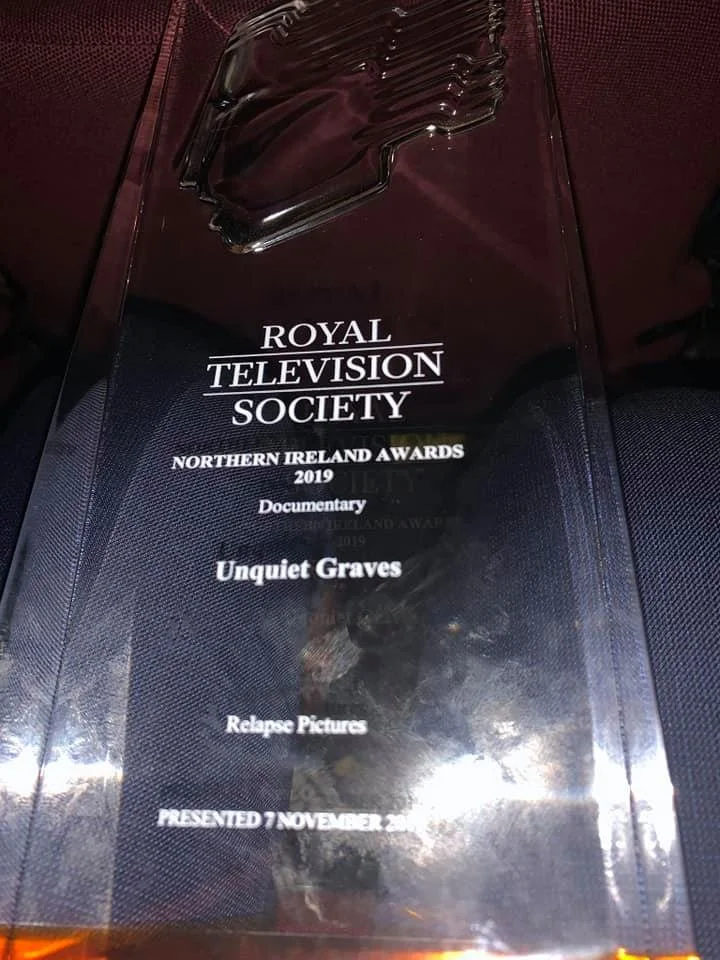

About Anne
Anne Cadwallader was born in London and spent her childhood in The Hague, Djakarta, Athens, Hamburg and Oslo while attending boarding schools in England.
Both her parents served in the British Army during WW2 and its aftermath. Her father, Peter, then became an oil company executive while her mother, Catherine (née Dawson) was a (reluctant) home-worker.
Of her two sisters - Jane and Sue - Jane is an established children’s book writer and teacher who founded an NGO in Uganda (www.adelanteafrica.org) while her younger sister, Sue, also served in the British Army before emigrating to New Zealand where her brother, Charles, a retired police officer, now lives.
After leaving home in 1971, Anne moved to London and was a nursing aide at the American Hospital of Paris before taking a degree in English at Exeter University where she edited the student newspaper and was vice-president of the Guild of Students.
Anne stood in local elections for the Labour Party in Exeter before graduating in 1979 and taking up a journalism scholarship at City University, London. Her first full-time job in journalism was at The Telegraph & Argus, Bradford. In April 1981, during the republican hunger strike, she visited Belfast for the first time.
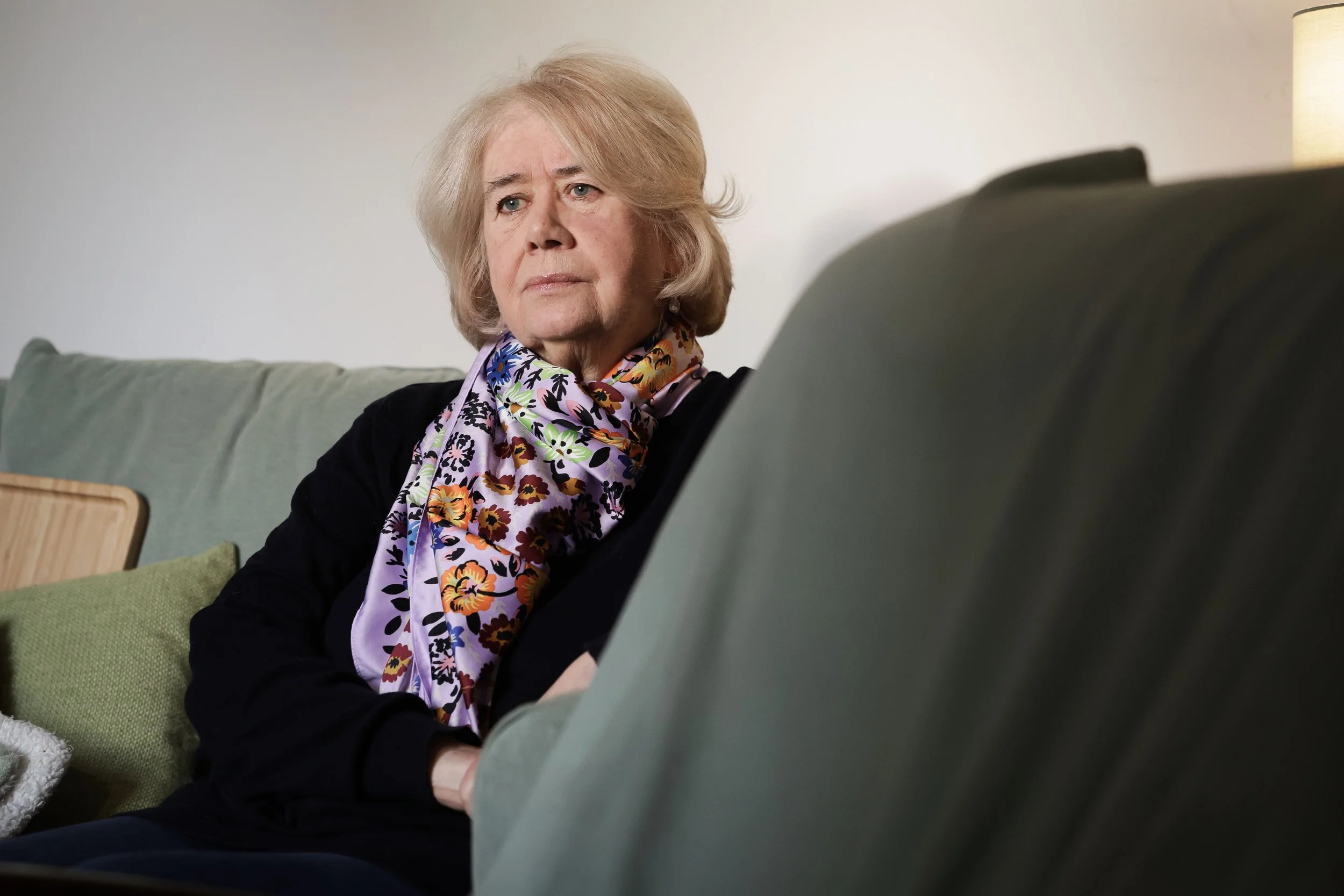
Intrigued by this experience, she began work as a current affairs radio journalist with BBC Northern Ireland in November 1981, arriving with all her worldly possessions in the back of a battered Fiat. In 1985, she was appointed a BBC correspondent in Dublin.
Anne joined The Irish Press in Dublin as Political Reporter in 1987 and was then the only woman journalist in the political correspondents lobby, before joining RTE as a producer on Morning Ireland in January 1990.
In August that year she married Gerry O’Hare, a former republican prisoner but at the time a parliamentary reporter/travel and tourism correspondent with The Irish Press.
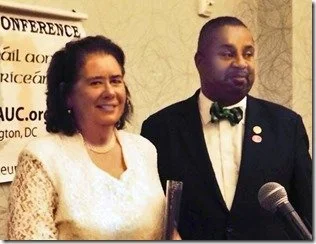
Anne receiving an award from the Irish American Unity Conference, Washington DC, in 2015Anne re-joined The Irish Press (as Northern Editor) in January 1991 until - on her 42nd birthday (May 26 1995) – the newspaper ceased publication when she went freelance, working for the BBC, Ireland on Sunday, The Irish Echo (New York), Reuters, The Examiner (Cork), The New York Times and The Christian Science Monitor (Boston).
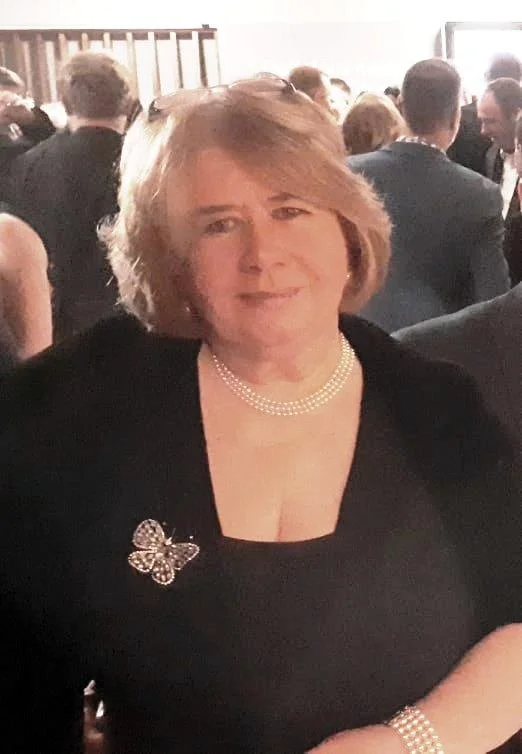
Anne at the 2019 ceremony where Unquiet Graves (based on Lethal Allies) won a Royal Television Society awardShe wrote Holy Cross (Brehon Press, 2004) about the loyalist blockade of a Catholic school in north Belfast which sold out both print runs while working (from 1997 to 2009) for Independent Network News, supplying news from Northern Ireland to the Irish network of 31 independent radio stations.
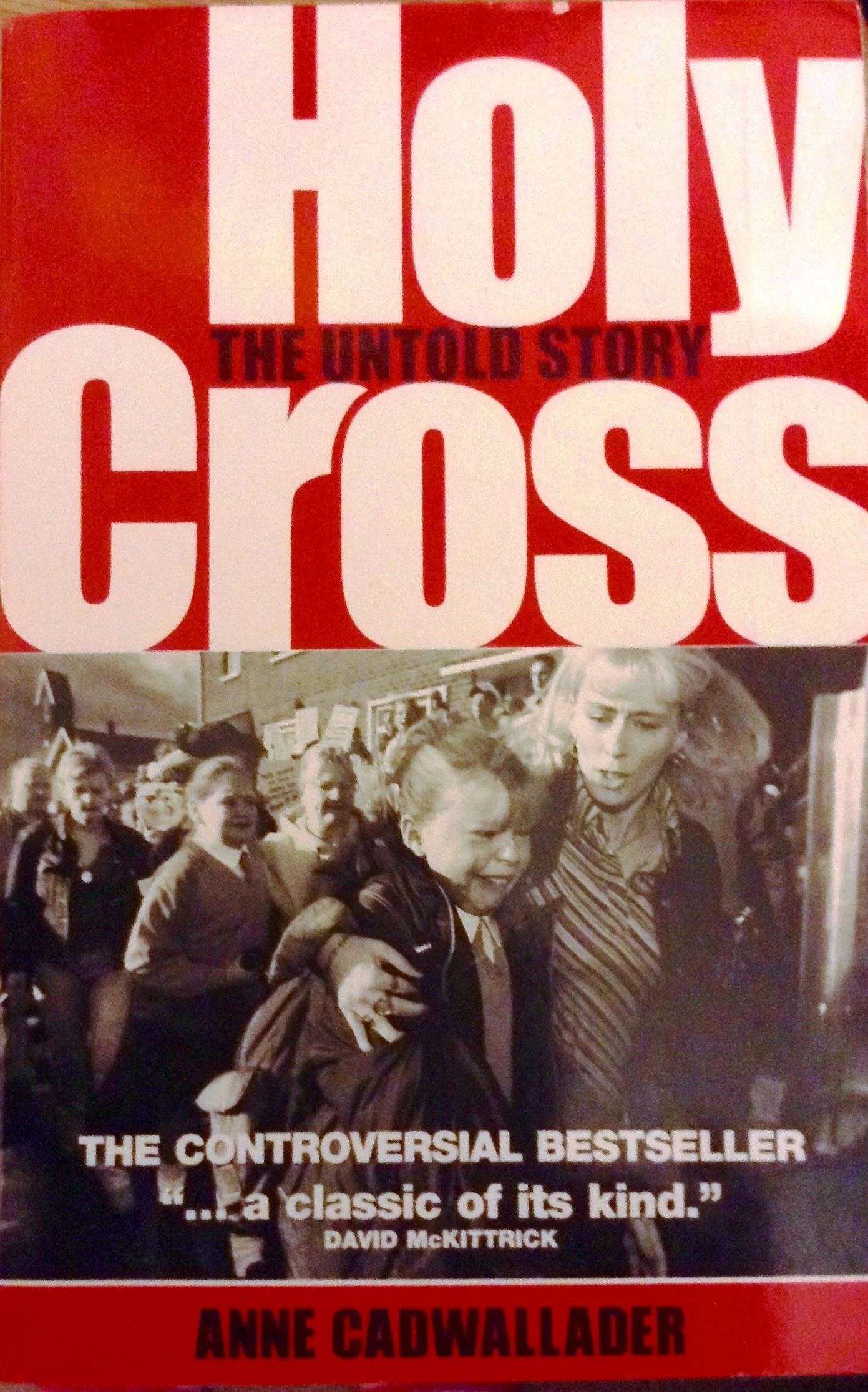
In 2009, after Gerry was diagnosed with Parkinson’s, she quit journalism to work part-time for The Pat Finucane Centre, based in Armagh city. There she continued the PFC and Justice for the Forgotten’s decade-long research into collusion between loyalists and state forces.
Four years later, in October 2013, Mercier Press in Cork published Lethal Allies:British Collusion in Ireland on the Glenanne Series of murders. It became a best-seller, sold out multiple editions and is the first book to ever be cited as an official legal exhibit in Belfast High Court.
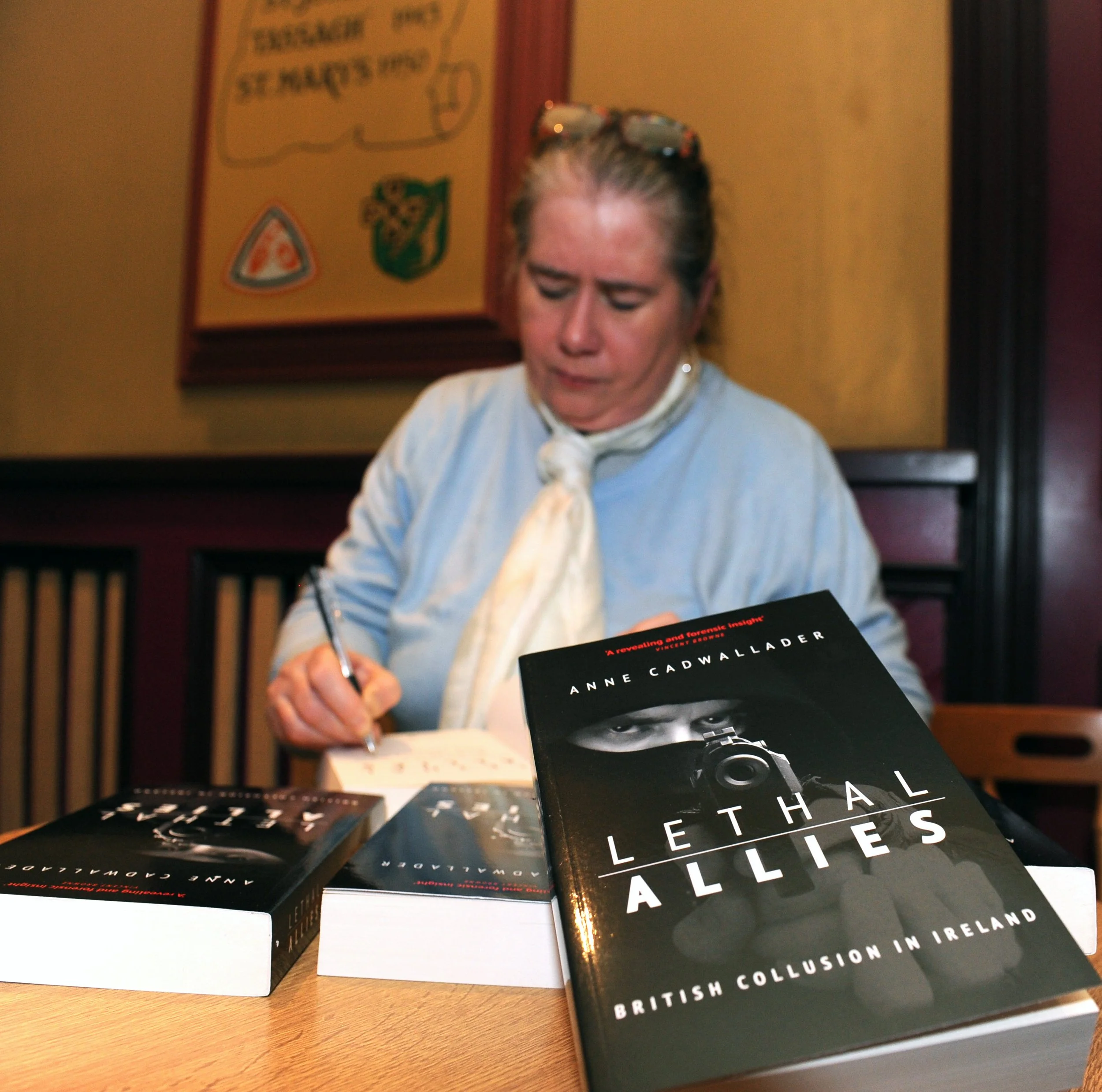
Anne signing copies of Lethal Allies in New York, 2015.The feature film documentary Unquiet Graves (Director/Producer/Writer: Sean Murray/Relapse Films), based on Lethal Allies, won a Royal Television Society award.
Anne has testified on state collusion and murder before two US Congressional Committees in Washington DC and has toured Ireland, Britain, the US, Australia and New Zealand promoting Lethal Allies.
Now retired, she divides her time between Belfast and Donegal and is fond of walking, gardening and travel. She is particularly close to her sister, Jane, and Jane’s children, Ana (Asturias/Spain), Georgie (Kampala/Uganda) and Tessie (Nairobi/Kenya).
“Cadwallader” comes from the Welsh/Briton from Cadwaladr, meaning “battle leader” or “warrior” (cad ”battle” + gwaladr “leader/ruler”). The name dates back to the 7th century, notably held by King Cadwaladr of Gwynedd.